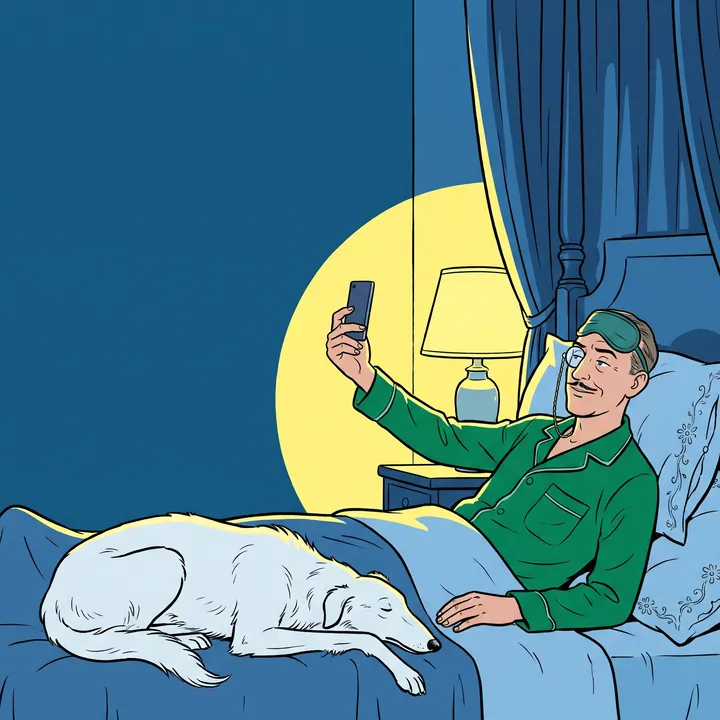
A duke cuts off his nephew's allowance because he thinks the young man is doing splendidly in business. Bertie Wooster receives the news with “Great Scot, Jeeves! This is awful.” He doesn't need a longer word for awful.
How Bertie Wooster sounds
Bertie's delight is just as unguarded. When Jeeves rescues a friend's prospects, he says: “You know, Jeeves, you’re a genius. You ought to be drawing a commission on these things.” Gratitude becomes a proposal to put Jeeves on a percentage.
Even agreement has warmth and emphasis: “I get you absolutely, dear boy.” Bertie talks to you as a pal. He panics freely, praises extravagantly and assumes you'll understand his predicament. A stiff, ceremonious version would lose most of what makes him entertaining.
That's what we study for this translator. Silvertongue is made by auscaster, and our literary styles come from the whole books on Project Gutenberg: here, P. G. Wodehouse's My Man Jeeves (1919) and Right Ho, Jeeves (1934). Replacing a few ordinary words with expensive-looking ones wouldn't give you Bertie.
The class tells Nancy Mitford made famous
A serviette sounds grander than a napkin. In the vocabulary Nancy Mitford made famous, that was precisely the problem.
The linguist Alan Ross introduced U and non-U in a 1954 paper. Mitford brought the distinction to a wider audience with her 1955 essay, “The English Aristocracy”. U meant upper-class; non-U meant outside that class. Some of the supposedly refined choices belonged in the second column.
These are the period's vocabulary distinctions:
| U | Non-U |
|---|---|
| Napkin | Serviette |
| Lavatory | Toilet |
| What? | Pardon? |
| Sofa | Settee |
| Pudding | Sweet |
| Writing-paper | Note-paper |
| Looking-glass | Mirror |
Small words do plenty of the work. So does bluntness: asking someone to repeat themselves with “What?” could be upper-class, while the more apologetic “Pardon?” gave the opposite impression. These distinctions describe a particular social world in the 1950s. They aren't a test of anybody's breeding today.
Translate into posh English, or back again
Type or paste your message into the tool above. We rewrite it as Bertie Wooster would say it, keeping every fact. It's free to try.
To go the other way, press the swap button and enter the posh text. You'll get the meaning in plain English. You can start there if you've received something elaborate and simply want to know what the person means.