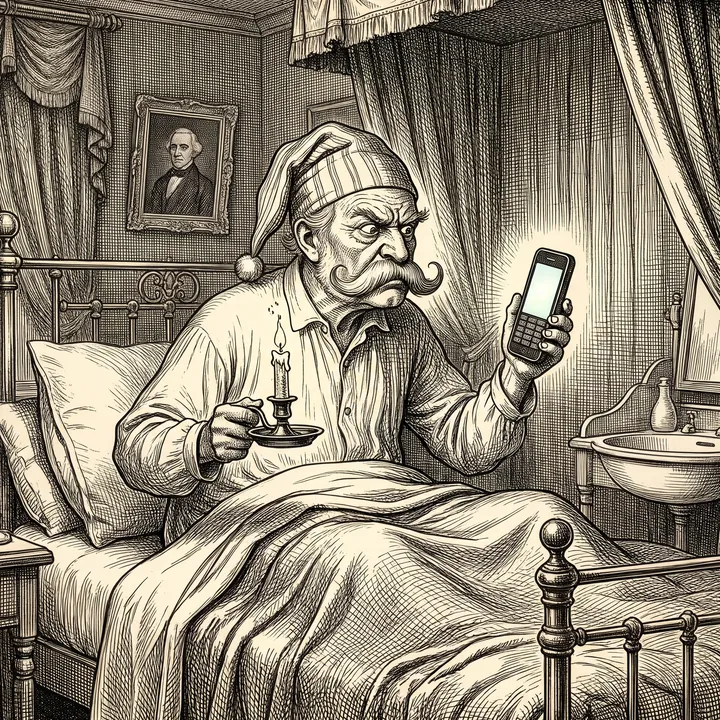
Mr Micawber needs flowers to wither and the sun to go down before he can finish explaining that he has overspent.
We studied Charles Dickens's The Pickwick Papers (1837), A Christmas Carol (1843) and David Copperfield (1850), read whole on Project Gutenberg.
How Micawber turns debt into drama
Micawber begins, “The blossom is blighted, the leaf is withered”, works through a sunset, then lands on “in short you are for ever floored.” Read the passage in David Copperfield.
His “in short” is an escape hatch. After the grand lament, he describes his financial position in language you could use after being punched. The long sentence has a destination. Adding syllables at random misses the joke.
His wife is equally ambitious with money words. Imagining his arrival in Australia, Mrs Micawber supplies a speech for him: “Have you posts of profitable pecuniary emolument?” She wants him to find a well-paid position. She makes it sound like a conqueror demanding tribute. Her imagined speech is here.
Courtesy depends on who's speaking
“It’s only once a year, sir,” pleads Bob Cratchit, late for work after Christmas. You can hear his dependence in that “sir”: he is answering the man who pays his wages. A Christmas Carol, Stave Five.
His wife has quite another response to their daughter's lateness: “Why, bless your heart alive, my dear, how late you are!” Mrs Cratchit kisses Martha and takes off her shawl and bonnet. The words sound like a reproach until you see the welcome. Read their reunion in Stave Three.
For us, that difference matters more than any antique greeting. Courtesy tells you who these people are to each other. Make everyone equally pompous and you've put Dickens's characters in costume without giving them anything to feel.
Translate in either direction
Type or paste your message into Silvertongue and we rewrite it in Victorian English, keeping every fact. Your complaint still asks for what you wanted; your thank-you still names what you appreciated.
Press the swap button to translate Victorian English into plain English. Silvertongue is a writing tool made by auscaster, and it's free to try.